
close
Choose Your Site
Global
Social Media
Author: Site Editor Publish Time: 2026-06-01 Origin: Site


Industrial facilities face compounding roofing challenges daily. Corrosive emissions, extreme thermal stress, and high maintenance costs accelerate traditional metal roofing degradation. Standard galvanized steel often struggles to survive these aggressive exposures. These harsh conditions routinely disrupt production lines. They also erode profit margins due to unexpected structural repairs. Facility operators need materials built specifically for long-term endurance.
The APVC roof sheet has emerged as a specialized composite alternative. Engineers designed it strictly for aggressive chemical and high-humidity environments. It offers a highly targeted defense mechanism where traditional metals fail rapidly. This guide provides an evidence-based framework for evaluating APVC roofing systems. We will compare them against alternative polymers.
You will learn how to assess implementation realities for large-scale facility upgrades. You will discover exact structural requirements and installation best practices. Plant managers can use this technical data to make precise, durable procurement decisions.
Targeted Durability: APVC utilizes a multi-layer composite structure to isolate corrosive elements, significantly outlasting galvanized steel in chemical plants, coastal facilities, and heavy manufacturing sites.
Operational Efficiency: Intrinsic thermal and acoustic insulation properties reduce facility cooling costs and dampen operational noise.
System Compatibility: Seamlessly integrates with translucent roof sheets for natural lighting while maintaining structural integrity.
Installation Reality: Long-term performance relies heavily on accommodating thermal expansion and adhering to strict purlin spacing standards.
Factory owners heavily rely on color-coated steel for industrial sheds. We must analyze this baseline to understand why alternative materials are now necessary. Traditional roofing systems carry hidden liabilities. They fail predictably under specific environmental pressures.
Color-coated steel degrades rapidly in challenging environments. Acid rain, alkaline vapors, and saline sea air act as aggressive catalysts. Moisture penetrates microscopic scratches in the painted surface. Once moisture reaches the bare steel beneath, oxidation begins immediately. Galvanized coatings offer temporary protection. However, constant exposure to low-pH chemical emissions eventually consumes the zinc layer. Coastal facilities face similar threats. Airborne salt particles constantly attack the metal roof. This relentless corrosion forces premature roof replacements. It also increases facility downtime.
Metal roofing introduces significant secondary costs. Steel acts as a highly effective thermal conductor. It absorbs solar radiation rapidly during summer months. This excessive solar heat gain turns industrial sheds into ovens. It forces HVAC systems to consume immense energy to maintain workable temperatures.
Furthermore, metal roofs amplify precipitation noise. Heavy rainfall or hail striking a steel roof generates severe noise pollution. Interior decibel levels can easily exceed 75 dB during storms. This amplified noise disrupts factory floor communication. It also poses a genuine safety hazard by masking important auditory alarms.
Traditional roofing materials carry a heavy physical burden. Heavy steel panels increase the overall dead load on the building structure. Engineers must specify thicker, more expensive steel framing elements to support this weight. This weight penalty directly elevates structural engineering costs. You must purchase more steel just to hold the roof up. It also complicates logistics. Heavier panels require larger cranes. Installation crews move slower, driving up labor expenses.
APVC overcomes metal vulnerabilities through advanced polymer engineering. Manufacturers co-extrude multiple specialized layers into a single panel. Each layer performs a distinct defensive function. This composite approach ensures maximum durability in aggressive environments.
Surface Layer: Manufacturers engineer the top layer using weatherable resins. This surface layer blocks ultraviolet radiation. It prevents premature aging and color fading. Most importantly, it creates a chemical isolation barrier against acid rain and airborne pollutants.
Core Structure: The middle layer integrates rigid UPVC roof sheet technology. This thick core provides essential structural rigidity. It delivers high impact resistance against hail or flying debris. It achieves this immense strength without adding excessive weight to the building profile.
Bottom Layer: The interior-facing layer focuses strictly on internal defense. Industrial manufacturing often produces hot, corrosive upward drafts. This bottom layer resists internal abrasion. It acts as a secondary chemical defense against rising factory fumes.
Procurement teams must demand objective data. Never rely purely on marketing claims. You should request specific third-party lab reports from manufacturers. Evaluate them against recognized industry testing frameworks.
| Performance Metric | Testing Standard / Framework | Expected APVC Performance |
|---|---|---|
| Acid Resistance | ISO 175 (Immersion in 20% Sulfuric Acid) | No visible blistering, cracking, or weight loss after 24 hours. |
| Alkali Resistance | ISO 175 (Immersion in 20% Sodium Hydroxide) | No structural degradation or surface softening after 24 hours. |
| Tensile Strength | ASTM D638 | High mechanical strength maintaining integrity under wind uplift forces. |
| Impact Resistance | ASTM D5420 (Falling Weight Test) | No penetration or shattering at maximum specified drop heights. |
Best Practice: Always verify that the lab reports match the exact sheet thickness you plan to order. Thinner profiles will yield different mechanical results than thicker industrial-grade profiles.
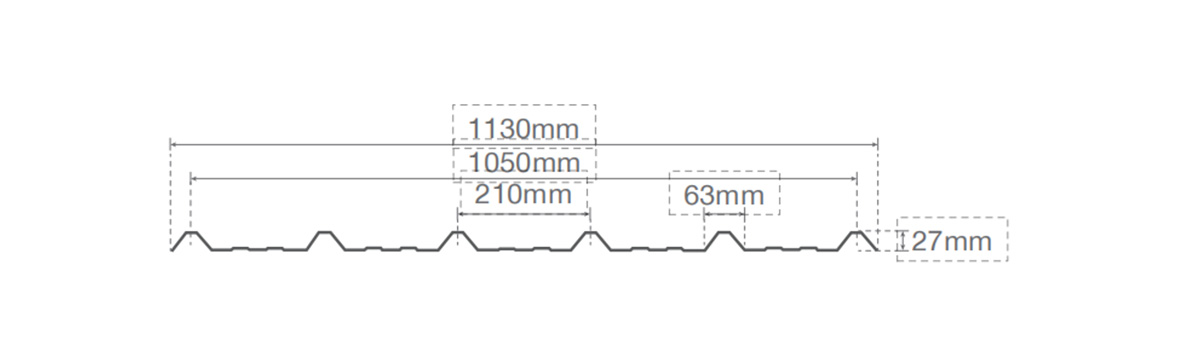
Selecting the right roof requires mapping material properties to specific facility operations. APVC performs exceptionally well in niche environments. We can evaluate its success using three critical operational criteria.
You must map APVC performance directly against your specific facility profile. Fertilizer plants emit high concentrations of ammonia. Ceramic factories produce heavy sulfur emissions. Coastal warehousing sheds face relentless saltwater spray. APVC natively resists these specific chemical attacks. The polymer chains simply do not react with these aggressive compounds.
You must establish realistic lifespan expectations based on exposure severity. Do not rely on theoretical maximums. In a standard warehouse, APVC might last decades. In a highly concentrated acid wash facility, you should calculate a shorter, optimized lifecycle. Regular inspections will help you track actual degradation rates over time.
Workers need comfortable, safe environments. Thermal and acoustic control heavily impacts daily operations. Let us examine the thermal conductivity coefficient. Steel possesses a thermal conductivity of roughly 45 W/m.K. APVC boasts a thermal conductivity of approximately 0.325 W/m.K. This massive difference means APVC drastically reduces solar heat transfer. Your facility stays cooler naturally.
Acoustic dampening capabilities also matter greatly. Heavy rain drumming on steel creates deafening environments. APVC absorbs this kinetic energy. It can achieve a decibel reduction of up to 30 dB compared to uninsulated steel. This reduction is crucial for worker safety. It ensures auditory alarms and machinery warnings remain audible during severe weather events.
| Material | Thermal Conductivity (W/m.K) | Rainfall Noise Level (Approx. dB) | Insulation Requirement |
|---|---|---|---|
| Color-Coated Steel | ~45.0 | 75 - 85 dB | Requires secondary insulation blankets. |
| APVC Composite | ~0.325 | 45 - 55 dB | Functions natively without extra layers. |
Manufacturers often advertise APVC as a lightweight solution. We must assess this claim critically. A lower dead load significantly reduces framing requirements. You can utilize lighter purlins and trusses. This saves considerable money on structural steel.
A lightweight profile also accelerates installation timelines. Workers can move and hoist panels rapidly. Despite its low weight, the dense composite structure maintains strict wind uplift resistance. When fastened correctly, it withstands severe coastal gales. It achieves an optimal balance between structural safety and material efficiency.
The plastics roofing market offers several variants. Facility operators often confuse them. You must understand the specific chemical and structural differences to make an informed choice.
Builders primarily utilize the ASA roof tile for color retention and aesthetic value. ASA (Acrylonitrile Styrene Acrylate) features incredible UV resistance. It holds vibrant colors for decades. Therefore, architects heavily specify ASA for residential villas, resorts, and commercial pavilions. However, an ASA roof tile is not engineered for heavy acid exposure. While beautiful, it falls short in heavy industrial applications. APVC prioritizes extreme chemical defense over prolonged aesthetic vibrancy.
We must also compare structural profiles and ideal use cases. A synthetic resin roof sheet offers excellent flexibility and moderate weather resistance. It serves well in light commercial or agricultural settings. However, synthetic resin lacks the rigid, dense core required for heavy industrial abuse. APVC provides superior cost-to-lifespan ratios in highly corrosive zones. Resin might cost less upfront, but APVC outlasts it significantly when exposed to industrial emissions.
Why do facility managers prioritize APVC for aggressive environments? They choose it because standard polymers fail under chemical stress. A standard UPVC or resin alternative will warp or degrade if exposed to concentrated alkali vapors. APVC offers a calculated, multi-layer defense. It represents the most reliable choice for heavy manufacturing, chemical storage, and coastal marine sheds.
Excellent materials still fail if installed poorly. System integration demands precise engineering practices. You must mitigate installation risks from the very first day.
Plastics expand and contract with temperature changes. You cannot treat APVC like steel. You must strictly manage thermal expansion. Installers must create pre-drilled, oversized holes for every single fastener. The hole diameter should be 2mm to 3mm larger than the screw shaft. This extra space allows the sheet to shift slightly as it heats up during the day.
Common Mistake: Driving screws directly through the plastic without pre-drilling. This restricts movement. The sheet will eventually suffer stress-cracking around the fastener as temperatures fluctuate.
Proper framing prevents long-term failure. You must outline the necessary purlin spans based strictly on sheet thickness. APVC sheets can soften slightly under extreme high-temperature conditions. If purlins are spaced too far apart, the sheets will sag over time. Sagging creates water pooling, which eventually causes leaks.
Sheets under 2.0mm thick: Keep purlin spacing tight (typically around 700mm).
Sheets 2.5mm to 3.0mm thick: Purlin spacing can extend to 800mm or 900mm.
Always consult the manufacturer’s structural load tables before finalizing roof framing.
Industrial factories require massive amounts of natural light. You must pair APVC profiles with compatible panels. We recommend integrating a matching translucent roof sheet made of Fiberglass Reinforced Plastic (FRP) or Polycarbonate (PC).
Best practices dictate that the translucent panels must share the exact same corrugation profile as the APVC sheets. This ensures a seamless overlapping joint. It optimizes natural factory lighting without compromising the waterproof envelope. Mismatched profiles will inevitably leak during heavy storms.
Your roof is only as strong as its weakest connection point. Standard steel screws will rust quickly in chemical environments. Emphasize the necessity of specialized waterproof, anti-corrosive fasteners. You should use 304 or 316 stainless steel screws.
Furthermore, every fastener requires a specialized EPDM rubber gasket. The EPDM gasket compresses over the oversized hole. It creates a flexible, watertight seal. It protects the roof's integrity while still permitting safe thermal expansion beneath the washer.
Industrial facility maintenance requires strategic material selection. Traditional metals simply cannot survive the aggressive chemical realities of modern manufacturing. We can draw several critical conclusions to guide your next structural upgrade:
APVC roof sheets are not a universal roofing material. They are a highly specific, high-ROI solution for environments where corrosion and thermal stress dictate building longevity.
Composite layer technology actively repels acids, alkalis, and salt spray while lowering interior building temperatures naturally.
Installation precision matters immensely. You must respect thermal expansion rules and strict purlin spacing limits to achieve maximum lifespan.
Your next steps require careful technical verification. We advise technical buyers to request physical samples directly from manufacturers. Review their third-party chemical resistance lab reports thoroughly. Finally, verify the exact profile compatibility with your existing structural purlins before requesting bulk quotes for your facility upgrade.
A: Standard warranties often state 15 to 20+ years. However, actual performance depends heavily on specific pH levels, emission concentrations, and local UV exposure. High-acid zones may see slightly shorter lifespans, while moderate zones easily exceed 20 years. Regular visual inspections are still strictly required to monitor surface conditions.
A: Yes, they perform exceptionally well in high-wind coastal zones. However, survival depends entirely on proper installation. They must be installed with appropriate, manufacturer-specified purlin spacing. You must use reinforced windproof washers and ensure the correct fastener density per square meter to resist upward lifting forces.
A: Initial material costs may vary depending on local markets and steel prices. However, APVC eliminates the recurring maintenance, regular rust-treatments, and early replacement cycles associated with steel. By removing these constant repair expenses, APVC delivers significantly better long-term financial efficiency for heavy industrial facilities.
A: While technically possible, it is heavily over-engineered for residential use. APVC prioritizes harsh chemical defense. We point residential buyers toward synthetic resin or ASA roof tiles instead. Those alternatives are explicitly designed for residential projects where aesthetic longevity, bright finishes, and wide color varieties are higher priorities.


