
close
Choose Your Site
Global
Social Media
Author: Site Editor Publish Time: 2026-03-06 Origin: Site


Preserving an older building requires a delicate balance between historical integrity and modern structural safety. One of the most significant challenges property owners face is the roof. Over decades, timber frames and load-bearing walls in vintage structures lose their original strength. Replacing a heavy clay or concrete roof with similar materials often leads to sagging or even catastrophic structural failure. This is why Lightweight materials have become the gold standard for renovation.
In this guide, we explore why Hollow Roof Tiles serve as the ultimate solution for aging architecture. These advanced components provide the aesthetic appeal of traditional roofing without the prohibitive weight. Beyond just being Lightweight, they offer Insulated properties and Heat resistant capabilities that original builders could only dream of. We will analyze the engineering behind these tiles and why they are the smartest investment for anyone looking to extend the life of a heritage or aging property.
Older structures were often built using natural materials like oak, stone, or brick. While these are durable, they are susceptible to "creep"—a slow deformation caused by constant pressure. When you combine decades of moisture exposure with the massive weight of traditional solid tiles, the roof's rafters begin to bow. Hollow Roof Tiles address this specific mechanical stress by significantly reducing the "dead load" on the building’s skeleton.
Traditional tiles can weigh up to 50kg per square meter. In contrast, a Double layer hollow design reduces this mass by nearly 40% while maintaining the necessary surface area for water runoff. By switching to a Lightweight alternative, you eliminate the need for expensive structural reinforcement, such as installing steel I-beams or doubling up on wooden rafters. It allows the building to "breathe" and settle naturally without the threat of collapse. It isn't just a cosmetic upgrade; it's a preventative measure against structural fatigue.
The primary reason Hollow Roof Tiles are so effective lies in their internal geometry. Unlike solid slabs of material, these tiles feature an internal "honeycomb" or ribbed structure. This Double layer configuration provides a high strength-to-weight ratio. It creates a rigid exterior shell while the interior remains mostly air.
Don't let the word "hollow" fool you. These tiles are engineered to withstand high impacts from hail or falling debris. The internal ribs act as support pillars, distributing pressure across the entire surface of the tile. This makes them remarkably durable compared to thin, single-sheet alternatives.
| Material Type | Avg. Weight (kg/m²) | Structural Impact |
| Concrete Tiles | 45 - 55 | High / Requires Reinforcement |
| Clay Tiles | 40 - 50 | High / Significant Stress |
| Hollow Roof Tiles | 18 - 25 | Low / Ideal for Old Timber |
| Natural Slate | 30 - 35 | Medium / High Cost |
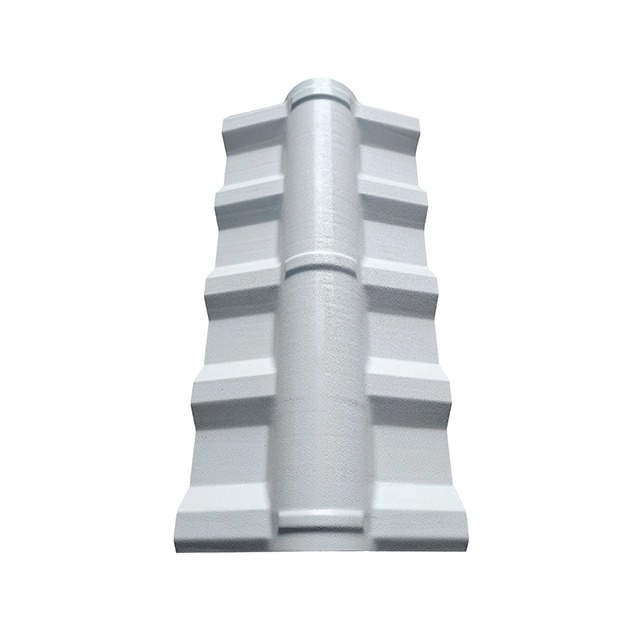
Older homes are notorious for being drafty in the winter and stiflingly hot in the summer. Original roofing lacked the thermal breaks required for modern energy efficiency. Because Hollow Roof Tiles contain trapped air pockets within their Double layer design, they function as an Insulated barrier.
Air is a poor conductor of heat. The hollow chambers within the tiles create a "dead air" zone that prevents the sun's energy from transferring directly into the attic space. This Heat resistant quality ensures that the interior temperature remains stable. During the day, the outer surface might get hot, but the thermal energy struggles to jump across the hollow gaps to reach the building's interior.
Reduced Cooling Costs: Lower attic temperatures mean air conditioning units don't have to work as hard.
Passive Insulation: It provides a consistent Insulated layer that complements existing fiberglass or spray foam insulation.
Acoustic Damping: The hollow structure also helps deaden the sound of heavy rain or hail, making the home quieter.
For older buildings located near the coast or in industrial areas, the environment is a constant enemy. Traditional metal or ceramic tiles can degrade due to salt spray or acid rain. Modern Hollow Roof Tiles are often manufactured using high-tech polymers or treated composites that feature Anti corrosion properties.
The chemical makeup of these tiles ensures they do not rust, rot, or harbor fungal growth. In many older buildings, moisture gets trapped in the porous surface of old clay, leading to moss growth that adds even more weight. The Anti corrosion surface of modern hollow tiles is non-porous. Water slides off immediately, and pollutants cannot "grip" the surface.
UV Resistance: High-grade coatings prevent the tiles from becoming brittle under the sun.
Waterproofing: The interlocking design combined with a Double layer shield ensures zero leakage.
Salt Spray Defense: Perfect for coastal heritage sites where salt air eats through standard materials.
Restoration projects are famous for going over budget. Often, the hidden costs come from "fixing the fix." If you choose a heavy roofing material, you must also pay for a carpenter to reinforce the roof's frame. By selecting a Lightweight solution like Hollow Roof Tiles, you save money on both labor and materials.
Because they are Lightweight, these tiles are much easier to transport and lift onto the roof. A team can cover a larger area in a shorter amount of time. They don't need heavy cranes or specialized lifting equipment that might damage the surrounding landscape or the building's foundation.
While the initial purchase of high-quality Hollow Roof Tiles might be comparable to traditional materials, the long-term savings are massive. You avoid future structural repairs. You spend less on energy bills because of the Insulated properties. And because they are Anti corrosion, you won't be looking at another replacement for decades.
When working with an older structure, the installation process must be less invasive. You can't just stomp around on an 18th-century timber frame. The Lightweight nature of Hollow Roof Tiles allows for a "top-down" approach that respects the integrity of the original building.
Old roofs are rarely perfectly square. They have "character," which is a polite way of saying they have bumps and curves. The modular nature of Hollow Roof Tiles allows them to be adjusted more easily than large, rigid sheets. They can be cut to fit around original chimneys and dormer windows without shattering.
Many owners worry that a modern Lightweight tile will look "plastic" or out of place. However, high-end Hollow Roof Tiles are designed to mimic the profile of traditional Mediterranean or S-shaped tiles. You get the Heat resistant and Anti corrosion benefits of the future while maintaining the visual charm of the past.
Choosing Hollow Roof Tiles is also a vote for the planet. Their Lightweight profile means they require less fuel to transport. Furthermore, many of these products are made from recyclable materials.
Efficiency: Less material is used to create the same surface area compared to solid tiles.
Recyclability: At the end of their life, these tiles can often be ground down and repurposed.
Durability: Longevity is the ultimate form of sustainability. A roof that lasts 50 years is better for the environment than one that needs replacing every 15.
By keeping an old building standing rather than tearing it down and starting over, you preserve the "embodied carbon" already in the structure. Hollow Roof Tiles make it possible to keep these old giants alive, combining Insulated technology with historical preservation.
Renovating an older structure is a labor of love, but it must be backed by smart engineering. Hollow Roof Tiles offer the perfect intersection of form and function. They provide the Lightweight relief that tired timber frames need, the Insulated comfort modern living requires, and the Anti corrosion durability that ensures the building will stand for another century. Whether you are dealing with a historic cottage or a mid-century warehouse, these tiles solve the "weight vs. weather" dilemma effectively.
Yes, thanks to their Double layer internal ribbing. They are designed to distribute weight and resist impact, making them just as durable for residential use as solid clay, but with much less mass.
In some cases, yes. Because they are so Lightweight, they are often used in "re-roofing" projects where they are laid over existing shingles. However, always consult a structural engineer first.
Absolutely. The Heat resistant properties come from the air gaps inside the tile. These gaps act as a thermal break, stopping heat from the sun before it enters your home.
Most high-quality Hollow Roof Tiles are made from fire-retardant materials. They are designed to meet strict building codes, providing peace of mind alongside their Insulated benefits.
We understand that a roof is more than just a cover; it is a shield for your most valuable assets. As a professional manufacturer with years of dedicated research, we have built a world-class production facility focused on high-performance roofing solutions. Our factory utilizes the latest automated extrusion technology to ensure every Hollow Roof Tile we produce meets rigorous quality standards. We take pride in our massive production capacity and our ability to provide customized solutions for global clients. Whether you need Anti corrosion materials for a coastal project or Lightweight tiles for a heritage restoration, our strength lies in our technical expertise and our commitment to durability. We are not just selling products; we are providing the structural security that modern and historical buildings deserve.


