
close
Choose Your Site
Global
Social Media
Author: Site Editor Publish Time: 2026-06-03 Origin: Site


Contractors, architects, and homeowners face a critical decision-stage dilemma today. They must constantly balance the beautiful aesthetic appeal of traditional clay tiles against the lightweight, weather-resistant demands of modern construction. Heavy materials require massive structural support, while basic plastics often degrade quickly under harsh sunlight. Enter the synthetic resin roof sheet. This highly engineered solution, specifically utilizing ASA-coated PVC, is rapidly replacing legacy materials in residential, pavilion, and commercial roofing projects worldwide.
This guide bypasses typical marketing fluff. We will objectively evaluate the structural composition, comparative performance, logistical realities, and installation parameters of ASA PVC composite tiles. You need clear, factual data to evaluate this modern roofing technology properly. By understanding both the engineering advantages and the physical limitations, buyers can make an evidence-based procurement decision for their next major build.
Advanced Co-Extrusion: True ASA PVC tiles rely on a 3-layer structure (ASA surface, PVC core, durable bottom) to deliver 20–30 years of functional lifespan.
Weight-to-Strength Ratio: Weighing only 4–6 kg/m², these sheets drastically reduce structural load requirements compared to clay or cement, cutting framing costs.
Objective Trade-offs: While highly UV and corrosion-resistant, synthetic resin requires precise installation to accommodate thermal expansion.
Logistics-Friendly: Engineered for global shipping, custom lengths are strictly governed by container dimensions (5.8m for 20ft, 11.8m for 40ft containers).
Modern roofing demands more than just basic weather protection. Material science plays a massive role in how a roof performs over decades. Premium resin tiles utilize advanced co-extrusion technology. This process fuses three distinct polymer layers together simultaneously. Each layer serves a highly specific mechanical purpose.
The top layer acts as the primary shield against the elements. Manufacturers use ASA (Acrylonitrile Styrene Acrylate) for this critical surface. Top-tier chemical companies, like SABIC, engineer this specific resin. ASA offers absolute superiority over standard commercial plastics. It intensely resists UV degradation. This stops the dark reds and greys from fading into chalky pastel tones after a few summers. Furthermore, ASA handles extreme temperature fluctuations effortlessly. It maintains structural integrity from -30°C in freezing winters up to +80°C under direct summer sun.
Beneath the ASA surface lies the structural core. This middle layer consists of rigid PVC (Polyvinyl Chloride). Rigid PVC provides exceptional structural strength without adding unnecessary weight. More importantly, this core layer acts as a powerful insulator. Metal roofs often suffer from severe acoustic issues during heavy rainstorms. The dense PVC core deadens this rainfall noise dramatically. This acoustic dampening proves crucial for residential comfort. It also provides excellent thermal resistance, keeping interior spaces cooler during summer.
The final bottom layer consists of a specialized, wear-resistant polymer backing. You might wonder why the underside needs such protection. Roof structures move slightly due to wind shear and internal environmental stress. The bottom layer ensures the tile maintains integrity against structural friction against the purlins. It also resists chemical vapors or moisture rising from inside the building, preventing internal decay over time.
Selecting the right roofing material means comparing apples to apples. You must evaluate competitive solutions to avoid bad-fit use cases. Below is a breakdown of how synthetic resins compare across various material categories.
Traditional materials carry massive weight penalties. Clay and cement tiles demand heavy, expensive timber framing to support their bulk. ASA resin reduces the overall roof load by up to 70%. This weight reduction speeds up installation and cuts framing material costs significantly.
Corrosion presents another major failure point for traditional roofs. Steel and metal sheets rust over time, especially near the ocean. ASA is chemically inert. This makes it an ideal, permanent solution for coastal properties or highly industrial residential zones exposed to acidic rain.
| Material Type | Average Weight | Corrosion Resistance | Installation Labor |
|---|---|---|---|
| ASA Resin | 4–6 kg/m² | Excellent (Inert) | Low (Large panel coverage) |
| Clay Tile | 40–50 kg/m² | High | Very High (Individual placement) |
| Steel Panel | 5–10 kg/m² | Poor (Prone to rust) | Medium |
Buyers often confuse different PVC categories. A standard UPVC roof sheet works exceptionally well for basic industrial sheds or agricultural barns. However, UPVC usually features a simple corrugated look. It lacks the elegant "single-tile" residential aesthetic. It also lacks long-term color stability under direct UV exposure.
Alternatively, an APVC roof sheet (Anti-corrosive PVC) acts as a solid mid-tier option. APVC handles harsh chemical environments beautifully. Yet, it still cannot match the premium UV-blocking surface of a true ASA roof tile for residential homes requiring decades of pristine color retention.
Polycarbonate offers incredible impact resistance. Unfortunately, PC remains highly prone to yellowing and hazing after prolonged sun exposure. Fiberglass (FRP) degrades even faster, becoming brittle and exposing glass fibers. If your project requires natural light, suggest pairing ASA main roofs with a translucent roof sheet specifically targeted for small skylights or patio sections only.
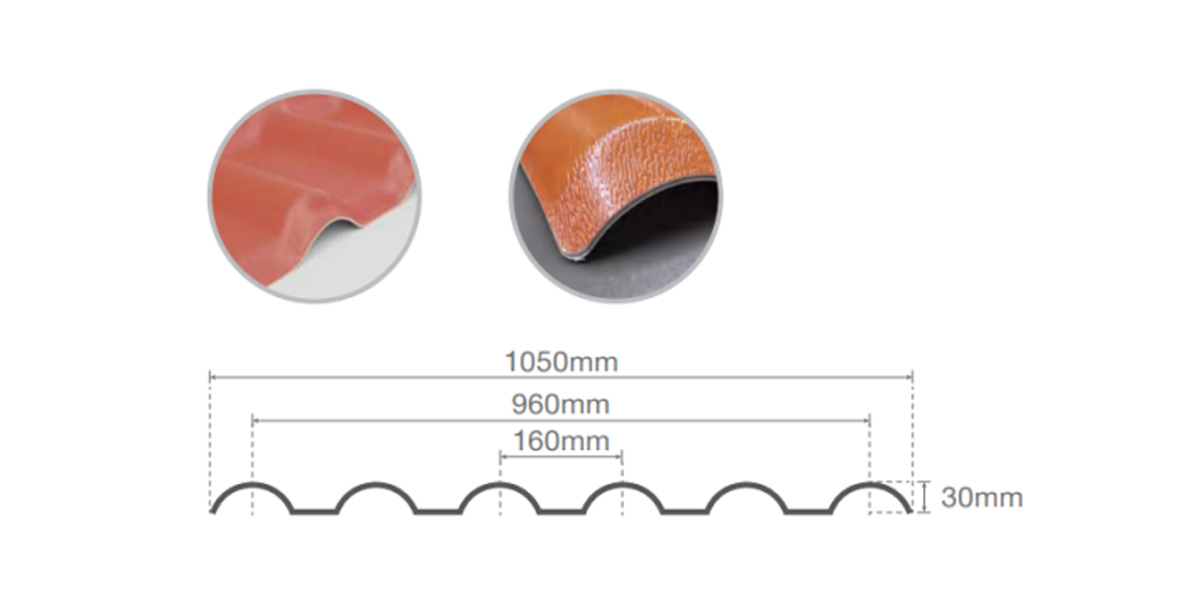
Matching technical specifications to architectural outcomes guarantees project success. Standardization helps contractors estimate material yields accurately. It also ensures the final visual matches the homeowner's expectations.
Understanding sizing terminology prevents costly ordering mistakes. Manufacturers list two different width measurements. Overall width indicates the physical size of the manufactured sheet (commonly 1050mm or 1080mm). Effective width represents the actual coverage area after overlapping the panels during installation (typically 960mm). Always calculate your material needs using the effective width.
Thickness dictates structural rigidity. Recommended thicknesses range across 2.3mm, 2.5mm, 2.8mm, and 3.0mm. Heavy snow load regions demand thicker panels. Section lengths are critical for seamless overlapping. A standard profile often features a 219mm pitch alongside a 30mm wave height. These specific geometry dimensions ensure water sheds rapidly off the roof.
Synthetic resin does not force you into a cheap plastic aesthetic. Manufacturers mold these sheets to mimic real terra cotta perfectly. Popular profile styles include:
Spanish Style: Features high, sweeping curves ideal for Mediterranean architecture.
Double Roman: Offers a classic, symmetrical wave pattern suited for European residential designs.
Antique Style: Provides a subtle, traditional look matching legacy regional building codes.
A roof is only as strong as its weakest seam. You must procure the matching accessories to guarantee a watertight seal. Cutting corners here leads directly to interior leaks.
Ridge Tiles: Cap the peak of the roof where two slopes meet.
Eaves Tiles: Seal the lower edges to prevent wind uplift and pest intrusion.
Drip Tiles: Direct water runoff precisely into the gutter systems.
Weatherproof Screws: Specialized fasteners featuring waterproof caps and EPDM rubber gaskets.
Transparency builds trust. No building material acts flawlessly in every scenario. Synthetic plastics possess specific physical behaviors. Installers must respect these traits to avoid catastrophic project failures.
Let us address the elephant in the room regarding plastics. ASA PVC expands and contracts dynamically with temperature changes. A roof baking in the midday sun expands. It shrinks rapidly when cool night air arrives. You cannot simply bolt the sheets down tightly like you would with steel.
Installers must use enlarged, pre-drilled screw holes. These oversized holes give the material room to slide back and forth under the fastener. You must also use specialized waterproof gaskets. These rubber gaskets compress slightly, maintaining a watertight seal while the plastic moves beneath them. Forcing screws directly through the plastic without pilot holes will cause warping or cracking within a single season.
The roof framing must provide adequate support. Purlin spacing must strictly adhere to the manufacturer's engineering guidelines. Typically, installers must place purlins roughly 660mm to 750mm apart. Exceeding this distance creates structural vulnerabilities. The resin sheets will inevitably sag if unsupported, especially under heavy winter snow or intense wind loads.
We must acknowledge the initial financial reality. ASA tiles carry a higher upfront material cost than basic asphalt shingles. Asphalt remains the ultimate budget choice for a quick house flip. However, synthetic resin represents a long-term ROI play. You eliminate the need for replacements every ten years. You drastically lower maintenance requirements. The upfront premium secures decades of structural peace of mind.
Sourcing materials internationally requires distinct logistical knowledge. Scalability depends on understanding freight limitations and vetting vendor credentials properly.
International buyers must educate themselves on shipping constraints before placing custom orders. Manufacturers can theoretically extrude limitless lengths of resin sheet. However, logistics strictly govern physical reality. To fit safely inside standard ocean freight containers, sheet lengths must be cut precisely.
For a standard 20ft container, lengths must measure ≤ 5.8 meters. If you book a 40ft high-cube container, maximum lengths can reach ≤ 11.8 meters. Exceeding these limits makes loading impossible and drives up shipping costs exponentially.
A warranty outlines the manufacturer's actual confidence in their product. Advise your procurement team to look for standard commercial coverage. A trustworthy warranty typically offers 20–25 years of overall coverage. Within that timeline, look for 10–20 years specifically guaranteeing against mechanical defects and severe color fading. Beware of lifetime warranties from unknown vendors; they rarely hold up legally.
Filter your potential factory partners using a strict, structured approach. Ask these specific questions during vendor selection:
Do they provide verifiable raw material sourcing? (e.g., invoices proving SABIC ASA resin usage).
Does the facility hold current ISO 9001 manufacturing certifications?
Are physical material samples readily available for destructive testing?
Do they offer clear OEM/ODM terms regarding custom colors and profile molds?
Selecting the optimal roofing material defines the ultimate success and longevity of any construction project. The ASA roof tile composite system is not a universally perfect material for every single architectural style. However, it currently stands as the most balanced, highly engineered choice for residential projects. It perfectly prioritizes lightweight structural durability, extreme coastal weather resistance, and beautiful traditional aesthetics.
Your next steps involve moving from research to active procurement. We recommend buyers immediately request physical material samples from verified manufacturers. Once you receive them, review your localized purlin spacing charts with your structural engineer. Finally, calculate your total landed cost accurately. Make sure you include the necessary specialized ridge caps, eave accessories, and weatherproof fasteners in your final budget.
A: Yes, but at a heavily delayed rate compared to standard plastics. Premium co-extruded ASA retains its core color vibrancy for 15 to 20 years. In contrast, cheaper single-layer PVC alternatives fade rapidly, often losing their color within just three to five years under direct sunlight.
A: Technically yes, but it is rarely recommended. You must verify local building codes regarding double-roofing limits. More importantly, you must ensure the existing weight-bearing structure can safely handle the combined load of the old roof plus the new framing and resin panels.
A: High-quality resin panels are highly fire-resistant. Reputable UPVC and ASA composites typically achieve a B1 or V-0 fire retardant rating. They will not spontaneously ignite, and they generally self-extinguish quickly once the direct external flame source is removed.
A: Rain noise is drastically reduced. The thick, dense interior PVC core acts as an excellent acoustic dampener. Unlike thin steel sheets that amplify rain into a deafening drum-like sound, synthetic composite tiles absorb the impact, maintaining a quiet, comfortable interior residential environment.


