
close
Choose Your Site
Global
Social Media
Author: Site Editor Publish Time: 2026-03-10 Origin: Site


When investing in industrial or residential roofing, the initial price tag often overshadows the more critical metric: Return on Investment (ROI). Many property owners prioritize low upfront costs, only to face mounting expenses in repairs and energy bills later. Hollow Roof Tiles represent a strategic shift in this calculation. By utilizing a Double layer internal structure, these tiles offer a unique balance of affordability and performance.
In this guide, we analyze why Hollow Roof Tiles are becoming the gold standard for long-term savings. We will look beyond the purchase price to explore how their Insulated properties reduce operational costs and how their Anti corrosion nature extends service life. If you are struggling to decide between traditional materials and modern synthetic solutions, this expert insight into cost versus longevity will clarify your path.
Budgeting for a roofing project requires a deep dive into material costs versus installation labor. Traditional clay or heavy metal sheets might seem standard, but Hollow Roof Tiles disrupt the traditional pricing model. Because they feature a Double layer design, they use material more efficiently without sacrificing thickness or strength. This engineering choice directly impacts the "Cost" side of the ROI equation.
Most buyers notice that high-quality Hollow Roof Tiles are priced competitively against premium coated steel. However, the real "hidden" saving starts at the transport phase. Being Lightweight, they cost significantly less to ship to your project site. Once they arrive, the ease of handling means your crew finishes the job faster. This reduction in man-hours often offsets the slightly higher cost of advanced synthetic materials compared to basic, low-grade alternatives.
Longevity is the most significant driver of ROI. A roof that lasts 30 years with zero maintenance is infinitely more valuable than one that lasts 15 years and requires biennial coating. Hollow Roof Tiles are engineered for harsh environments. They typically utilize high-grade synthetic resins or UPVC, materials naturally resistant to chemical breakdown.
Unlike metal which eventually rusts, or clay which cracks under frost-thaw cycles, these tiles remain stable. Their Anti corrosion properties make them ideal for coastal areas or industrial zones where chemical fumes would degrade traditional materials within a decade. By choosing Hollow Roof Tiles, you are essentially buying time—years of protection where the material remains structurally sound and aesthetically pleasing without expensive reapplications of protective paint.
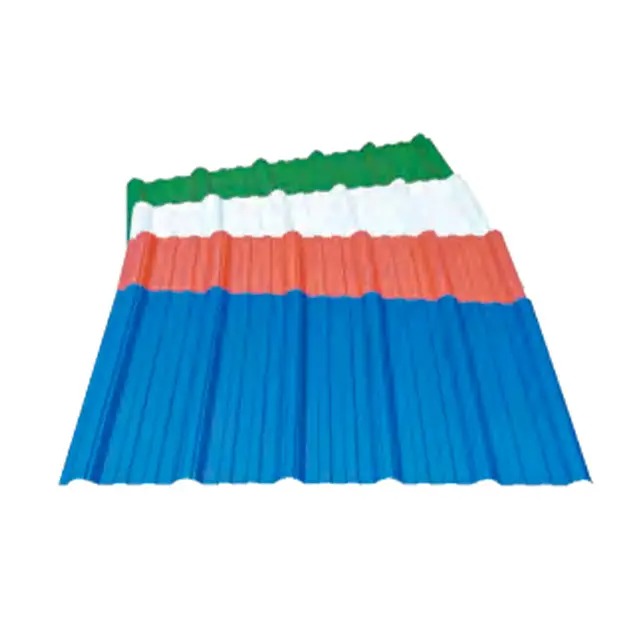
One of the most compelling arguments for the ROI of Hollow Roof Tiles is their impact on the building's energy footprint. This is where the "Hollow" part of the name proves its worth. The air trapped within the Double layer structure acts as a natural thermal break. It creates an Insulated barrier that traditional solid tiles simply cannot match.
Buildings covered with Heat resistant roofing require significantly less energy to cool during peak summer months. In industrial warehouses, where air conditioning is either impossible or extremely expensive, Hollow Roof Tiles keep the interior temperature several degrees lower than the outside ambient air. Over a 20-year period, these monthly energy savings can actually pay for the entire cost of the roof.
Beyond heat, the Insulated air gap prevents rapid temperature transitions between the exterior and interior surfaces. This reduces condensation buildup on the underside of the tiles. In many industrial settings, condensation leads to mold and equipment damage. By mitigating this risk, Hollow Roof Tiles protect the internal assets of the building, further boosting the overall ROI of the structure.
ROI isn't just about how long a product lasts; it's about how much it costs to get it onto the building. Heavy roofing materials like concrete or traditional clay require a massive, reinforced support structure. This adds thousands of dollars to the "skeleton" of your building. Hollow Roof Tiles offer a different path.
Because they are Lightweight, they place much lower stress on the rafters and purlins. In many renovation projects, you can install these tiles directly over existing structures without needing to reinforce the foundation or walls. This flexibility saves a fortune in structural engineering costs.
| Metric | Traditional Clay/Metal | Hollow Roof Tiles |
| Weight per SQM | 40kg - 60kg | 4kg - 6kg |
| Structural Requirement | High (Heavy Purlins) | Low (Lightweight Frames) |
| Labor Speed | Slow / Labor Intensive | Fast / Modular |
| Logistics Cost | High (Heavy Loads) | Low (Stacked & Light) |
To find the true ROI, we must look at the "Total Cost of Ownership" (TCO). A roof that costs $10,000 today but requires $1,000 in maintenance every three years is more expensive than a $15,000 roof that requires $0 in maintenance for thirty years. Hollow Roof Tiles are designed for the latter scenario.
The surface of high-quality Hollow Roof Tiles is typically non-porous. It resists the growth of moss and algae, which are the primary culprits for tile degradation in humid climates. Furthermore, their Anti corrosion surface ensures that pollutants don't "pitting" the material. Most owners find that a simple rain shower is enough to keep the roof clean, removing the need for professional pressure washing or chemical treatments.
If a catastrophic event occurs—like a massive falling tree limb—the modular nature of Hollow Roof Tiles makes repairs simple. You can replace individual sections without disturbing the entire system. Because they are Lightweight and often use a simplified interlocking mechanism, maintenance staff can handle minor repairs without hiring specialized roofing contractors, keeping the long-term ROI firmly in the positive.
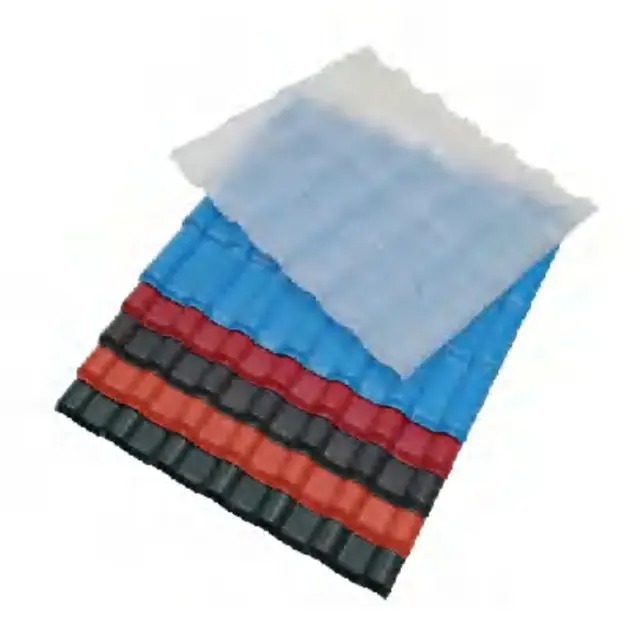
A roof's longevity is only as good as its weakest point during a storm. Traditional tiles can be lifted by wind or shattered by hail. Hollow Roof Tiles are engineered to be Heat resistant and impact-tough. The Double layer geometry acts as a shock absorber. When hail hits, the outer layer flexes slightly, transferring energy into the air gap rather than cracking the entire tile.
Constant sun exposure is the "silent killer" of roofs. UV rays break down molecular bonds in many plastics and paints. However, professional-grade Hollow Roof Tiles incorporate UV stabilizers throughout the material, not just as a top coat. This ensures the tiles don't become brittle over time. They remain flexible enough to handle thermal expansion and contraction, which is vital for maintaining a waterproof seal over decades.
In coastal regions, salt spray destroys metal roofing in as little as five years. The Anti corrosion nature of synthetic Hollow Roof Tiles makes them the only logical choice for high-ROI in these areas. They are completely immune to salt-air oxidation. This single feature can quadruple the lifespan of a roof in a coastal industrial park compared to galvanized steel.
Modern ROI calculations now include environmental compliance and "Green" building certifications. Hollow Roof Tiles contribute to this in two ways: material recyclability and energy reduction. Because they are Insulated, they help buildings meet modern energy codes without requiring thick, expensive layers of additional glass wool or foam insulation.
Most Hollow Roof Tiles are made from thermoplastics that can be melted down and repurposed at the end of their 30+ year lifespan. This reduces landfill fees—a growing cost for commercial property owners. When you calculate the ROI, the "end-of-life" cost of disposing of hazardous or non-recyclable materials is a liability that these tiles help you avoid.
The Lightweight nature of the product means fewer trucks on the road for delivery and less energy used in the manufacturing process compared to high-heat kiln-fired bricks or energy-intensive metal smelting. For corporations tracking their ESG (Environmental, Social, and Governance) scores, the use of Double layer synthetic roofing is a measurable win that adds intangible value to the property.
Not all Hollow Roof Tiles are created equal. To ensure you get the longevity promised, you must look for specific technical markers. The ROI is only realized if the product performs as advertised for the full duration of its expected life.
Check the thickness of the internal ribs. These ribs provide the structural "columns" for the tile. If they are too thin, the tile may sag under heavy snow loads. An expert-grade Hollow Roof Tile maintains a consistent wall thickness throughout the Double layer to ensure uniform Insulated properties across the entire roof surface.
Ask for ASTM or ISO test results regarding chemical resistance. If you are roofing a factory that produces acidic byproducts, you need a tile that has been tested against those specific chemicals. A Heat resistant tile that isn't also chemically stable will fail early, destroying your ROI. Always match the material grade to your specific environmental stressors.
The ROI of Hollow Roof Tiles is found in the intersection of low installation costs and high-performance longevity. While the Double layer design provides a Lightweight and Insulated solution to modern building challenges, it is the Anti corrosion and Heat resistant properties that truly protect your wallet over time. By reducing structural requirements, slashing energy bills, and eliminating frequent maintenance, these tiles offer a financial advantage that traditional materials simply cannot match. When you choose the right material, your roof stops being an expense and starts being a long-term asset.
1. Are Hollow Roof Tiles strong enough to walk on?Yes, high-quality Hollow Roof Tiles are designed with internal ribbing that provides excellent weight distribution. While you should always use crawl boards for safety, the Double layer structure is surprisingly rigid and can handle standard maintenance traffic.
2. How do Hollow Roof Tiles handle extreme cold?They perform exceptionally well. Unlike clay, which can absorb water and crack when it freezes, these tiles are non-porous. The Insulated air gap also helps keep the interior warmth from escaping, reducing ice damming on the roof edges.
3. Do they fade in the sun?Premium Hollow Roof Tiles use co-extrusion technology with UV-resistant top layers. This ensures that even under intense sun, the Heat resistant material retains its color and structural integrity for decades.
4. Is the noise from rain louder on hollow tiles?Actually, it is quieter. The Double layer and the air gap act as a sound dampener. Unlike single-layer metal sheets that "ring" during a rainstorm, the hollow structure absorbs the vibration, leading to a much quieter interior environment.
At our facility, we don't just manufacture roofing; we engineer long-term solutions. I am proud to lead a team that operates a high-capacity, modern factory dedicated to the precision production of Hollow Roof Tiles. We have invested heavily in multi-layer co-extrusion lines that ensure every sheet has a perfect Double layer structure for maximum Insulated performance. Our strength lies in our rigorous quality control; we test every batch for Anti corrosion stability and impact resistance to ensure our clients receive the highest ROI possible. With years of experience serving the B2B sector, we understand that a roof is a critical business investment. We are committed to providing Lightweight, Heat resistant materials that stand the test of time, backed by the technical expertise and manufacturing scale that only a true industry leader can offer.


