
close
Choose Your Site
Global
Social Media
Author: Site Editor Publish Time: 2026-06-04 Origin: Site


Warehouse daylighting acts as a delicate balancing act for modern industrial facilities. You want to reduce electrical lighting costs, but you must simultaneously manage thermal heat gain inside the building. Achieving this balance transforms a dark, inefficient facility into a highly productive workspace. Facility managers face a core bottom-of-funnel challenge when integrating natural light. You need consistent illumination, but you absolutely cannot risk introducing roof leaks, structural vulnerabilities, or accelerated UV degradation into your building envelope. A poor material choice quickly turns a bright idea into a costly maintenance nightmare. Selecting the right translucent roof sheet requires deeply evaluating material lifespan, precise profile compatibility, and local environmental factors. You must also align the panels against specific facility compliance and safety requirements. In this comprehensive guide, you will learn how to choose the optimal daylighting panels for commercial and industrial warehouses.
Translucent panels reduce warehouse energy consumption but must be matched precisely to existing roof profiles (e.g., R-Panel, PBR) to prevent leak liabilities.
Material selection dictates ROI: Polycarbonate offers high impact resistance, while APVC/UPVC excels in corrosive industrial environments.
Clear panels maximize light, but diffused/opal panels are critical for preventing localized heat spots and inventory damage.
Proper installation must account for thermal expansion rates, which differ significantly from adjacent metal or standard roofing panels.
Integrating daylighting into commercial spaces presents a clear operational trade-off. You save significantly on electrical lighting. However, you might inadvertently increase facility cooling costs. We must establish baseline success metrics for commercial daylighting. Facility managers typically track the daily reduction in kilowatt-hour consumption. They then compare these electrical savings against any added air conditioning demands. A successful daylighting strategy lowers net energy usage consistently across all seasons.
Natural light fundamentally alters warehouse operational productivity. Ample daylight improves overall facility safety. Workers can read labels faster and navigate aisles securely. Industry studies routinely show how natural, diffused light reduces order picking errors. It also enhances daily worker conditions. Employees experience less eye strain under natural lighting compared to harsh artificial fluorescents. Brighter environments simply keep warehouse teams more alert and productive.
Facility planners must also establish strict long-term durability standards. Not all plastics survive severe industrial environments. We define an "industrial-grade" panel by several non-negotiable characteristics. High-quality panels feature co-extruded UV protection. This protective layer prevents the plastic from breaking down under intense sun exposure. Industrial panels also possess specific load-bearing capacities. They must withstand local snow accumulations and heavy wind uplifts. Finally, premium materials show strong resistance to yellowing. A panel loses its entire functional purpose if it turns opaque after just five years.
Target a roof-to-skylight ratio between 3% and 5% for optimal illumination.
Install automated lighting controls. They dim artificial lights when natural daylight suffices.
Perform annual maintenance checks. Cleaning dirt accumulation maintains high light transmission rates.
Choosing the right polymer determines how long your roof system survives. Polycarbonate and FRP represent the two most common traditional choices. Polycarbonate highlights superior impact resistance. It survives intense hail storms and flying debris easily. This material also exhibits a much slower degradation rate. FRP, or Fiberglass Reinforced Plastic, offers high cost-effectiveness for budget-conscious projects. However, you must address the historical risks of FRP. Older fiberglass panels often experience "fiber bloom." The resin wears away, exposing raw glass fibers. This degradation leads to severe yellowing and drastic light reduction over time.
Corrosion-resistant alternatives dominate highly specialized industrial sectors. Metal roofs and standard plastics often fail near caustic environments. Facilities dealing heavily in chemical processing require specialized solutions. We strongly recommend using a UPVC roof sheet for these corrosive applications. Unplasticized polyvinyl chloride resists aggressive chemical vapors brilliantly. Similarly, an APVC roof sheet provides exceptional defense against high humidity and coastal salt spray. These anti-corrosive materials prevent premature roof failure in harsh manufacturing zones.
Some facilities require heavy-duty performance combined with architectural integration. You might need to match an existing aesthetic while maximizing weather resilience. In these cases, integrating a synthetic resin roof sheet makes perfect engineering sense. These advanced composites handle extreme temperature fluctuations easily. If your building design relies on specific architectural styles, matching an ASA roof tile layout provides seamless visual continuity. ASA coatings offer incredible color stability against UV radiation. You gain the benefits of natural light without sacrificing the building's exterior appearance.
Procurement teams often assume maximum clarity equals maximum efficiency. This assumption creates massive operational problems. We must explain why 100% direct light transmission rarely suits warehouses. Clear panels allow harsh direct sunlight into the facility. This creates blinding glare for forklift operators. Direct light also creates intense hot spots on your valuable inventory. We strongly advocate for light-diffusing panels. Opal or frosted panels spread illumination evenly across the entire warehouse floor. They eliminate harsh shadows and protect workers' visibility.
Understanding thermal metrics remains critical for procurement teams. You must evaluate the Solar Heat Gain Coefficient (SHGC) alongside the U-Value. SHGC measures how much solar radiation enters the building. A lower SHGC means less heat transfer. U-Value measures the general insulating capability of the material. Single-skin panels offer poor insulation. Multi-wall translucent sheets insulate significantly better. Their internal air pockets trap heat during winter and block heat during summer. Tinted panels also help lower the SHGC considerably.
Protecting stored goods requires mandatory UV blocking technology. Raw sunlight degrades packaging materials rapidly. It fades cardboard boxes and makes plastic wrappings brittle. Facilities storing perishable goods or sensitive chemicals face even higher risks. You must specify panels featuring integrated UV-blocking layers. Co-extruded UV protection blocks up to 99% of harmful ultraviolet radiation. This feature ensures your interior climate remains bright without compromising your inventory.
| Panel Type | Light Transmission | Thermal Heat Gain (SHGC) | Ideal Warehouse Application |
|---|---|---|---|
| Clear Single-Skin | Up to 90% | High | Unheated storage sheds, agricultural barns |
| Diffused / Opal | 45% - 65% | Moderate | General logistics, manufacturing floors |
| Multi-Wall Tinted | 30% - 50% | Low | Climate-controlled storage, chemical storage |
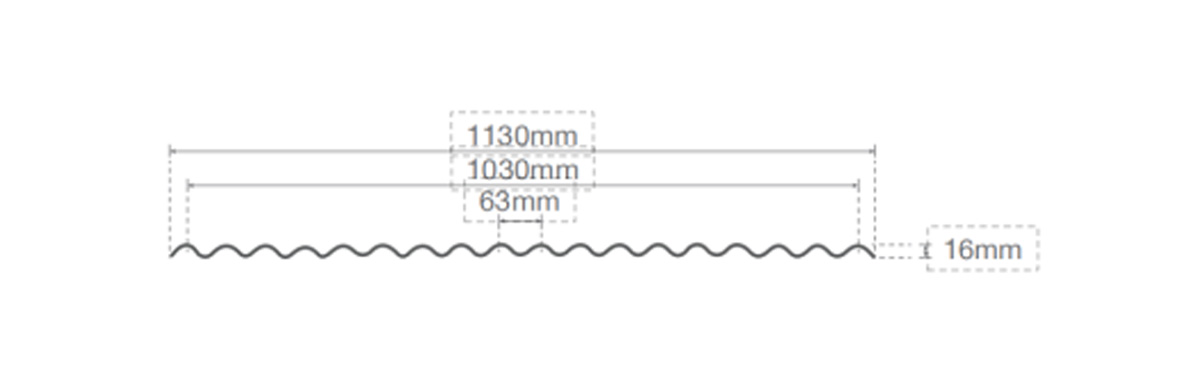
A high-quality panel fails instantly if it does not fit the roof structure. You must prioritize seamless profile integration during the design phase. Translucent panels must interlock seamlessly alongside adjacent metal roofing. You must specify exact profile matches. Common industrial profiles include corrugated, ribbed, trapezoidal, R-Panel, and PBR. Even a millimeter of deviation prevents a secure seal. Procurement teams must request physical samples to test against the existing metal roof deck.
Avoiding water ingress demands strict attention to physics. Roof leaks often result from capillary action. Water can travel upward between tightly sandwiched panels. Mismatched profiles or improper side-laps invite this moisture into your building. A commercial roof leak damages inventory and disrupts operations. Contractors must ensure the plastic panel overlaps the metal panel correctly. The prevailing wind direction dictates how you sequence these overlapping joints.
We must also clarify weight and load assumptions. Plastics and metals behave very differently under stress. Translucent panels have much lower spanning capabilities compared to steel metal panels. You cannot simply drop a plastic sheet across wide purlin gaps. Doing so risks catastrophic structural collapse during heavy weather. Additional purlin support may be required beneath the plastic sections. You must reinforce the framing to meet local wind and snow load building codes.
Guessing the profile based on photographs instead of measuring peak-to-peak distances physically.
Ignoring the existing metal roof's pitch. Low-slope roofs require specialized weather-tight sealing methods.
Failing to support the panel edges properly, leading to wind flutter and eventual fastener failure.
Installation dictates the ultimate lifespan of any daylighting system. Managing thermal movement sits at the very top of your priority list. Plastics expand and contract at vastly different rates than metal. A rigid installation destroys the panel. You must outline the necessity of oversized pre-drilled holes. Fasteners must never pin the plastic down tightly. Contractors must use specialized fasteners equipped with EPDM sealing washers. EPDM rubber compresses gently, sealing the hole while allowing the panel to glide during temperature swings.
Roofing projects present significant safety hazards. You must address the inherent danger of skylight falls. OSHA compliance remains absolutely mandatory for all facility operations. Unprotected skylights act exactly like open holes on a roof. We recommend discussing required safety netting beneath the installation zone. You can also install metal safety grids directly over the daylighting panels. Alternatively, facility managers should specify walk-safe rated panels. These reinforced panels support a worker's weight during accidental impacts.
Chemical compatibility between sealants and plastics requires careful verification. Using the wrong caulking causes chemical embrittlement. The plastic panel will literally crack and shatter at the joints. We advise on the correct use of high-quality butyl tape. Butyl tape provides a flexible, waterproof gasket between the metal and the plastic. Always choose non-hardening sealants compatible specifically for polycarbonate, UPVC, or FRP. Avoid aggressive silicone adhesives unless explicitly approved by the panel manufacturer.
Optimizing warehouse daylighting demands precise material specification and rigorous installation standards. Your shortlisting logic should follow a clear decision matrix based on your facility's unique environment. Specify highly chemical-resistant UPVC profiles for caustic manufacturing zones. Choose diffused, multi-wall polycarbonate panels for general logistics and temperature-sensitive warehousing. Prioritize matching the exact metal roof profile to eliminate costly water ingress liabilities.
Your immediate next steps involve conducting a thorough audit of your current roof profile. Identify your existing metal panel dimensions accurately. Next, establish your target light-transmission percentages based on daily operational needs. Always request comprehensive material data sheets (MDS) before authorizing bulk procurement. Do not leave your building's integrity to chance. Contact a specialized structural materials expert today to request a quote and ensure your daylighting strategy succeeds safely.
A: The lifespan is highly dependent on the UV-layer thickness. High-grade polycarbonate featuring co-extruded UV protection typically lasts 15 to 20 years without clarity loss. Conversely, basic FRP materials often show noticeable yellowing and fiber exposure within 5 to 7 years in harsh environments.
A: Yes, you can replace specific metal sections easily. However, the plastic profile must perfectly match the existing metal layout. Matching popular profiles like PBR or standard corrugated ensures weather-tight side and end laps. Precise matching eliminates structural gaps and leak risks.
A: Polycarbonate typically offers higher light transmission rates and superior physical impact resistance. However, UPVC and APVC sheets provide vastly superior chemical resistance and structural thermal insulation. This makes UPVC much better suited for specialized, highly corrosive industrial environments.
A: Single-skin clear panels definitely increase interior heat through direct solar radiation. You can easily mitigate this issue. Simply choose diffused, tinted, or multi-wall panels. These specific variations lower the Solar Heat Gain Coefficient (SHGC), balancing excellent natural light with manageable temperatures.
A: Successful installation requires strictly accounting for rapid thermal expansion. Installers must drill oversized fastener holes. They must use chemically compatible EPDM washers to seal penetrations. Installers must also strictly adhere to recommended purlin spacing guidelines to prevent the resin panels from sagging over time.


