
close
Choose Your Site
Global
Social Media
Author: Site Editor Publish Time: 2026-10-26 Origin: Site


Industrial, agricultural, and commercial roofing systems frequently fail prematurely. This failure rarely comes from structural load. Instead, continuous exposure to ultraviolet radiation, chemical off-gassing, and extreme temperature cycling destroys the material. Facility managers and procurement engineers face a recurring trade-off with traditional materials. Metal corrodes and rusts in high-alkali or high-acid environments. Modified bitumen requires heavy, ongoing maintenance. Standard plastic sheets become brittle, discolor, and lose impact resistance under prolonged UV exposure.
Co-extrusion technology fundamentally shifts this paradigm. Manufacturers fuse Acrylonitrile Styrene Acrylate (ASA) with Polyvinyl Chloride (PVC) into a specialized multi-layer architecture. This process isolates specific performance variables. You can block UV rays on the surface while maintaining structural rigidity in the core. This guide breaks down the technical evaluation of ASA PVC composite roof tiles. We will explore how these four-layer systems mitigate long-term maintenance liabilities and outperform traditional single-layer materials.
Targeted Layering: Four-layer ASA PVC composite roof tiles utilize co-extrusion to assign specific protective roles (UV blocking, structural rigidity, thermal insulation, and chemical resistance) to distinct material layers.
Superior Weatherability: The integration of an ASA surface layer effectively eliminates the rapid UV degradation and color fading inherent to standard plastic roof tiles and PVC roofing sheets.
Corrosion Immunity: Unlike metal alternatives, the rigid PVC core and ASA surface cannot rust. ASA PVC systems are inherently inert to most industrial acids, alkalis, and salts, making them critical for chemical plants and coastal facilities.
A roofing material must simultaneously resist external weathering, bear physical loads, block thermal transfer, and withstand internal facility emissions. Single-material solutions force a compromise. You either get UV resistance with poor load-bearing capacity, or high strength with severe corrosion risks. Multi-layer co-extrusion solves this by stacking specialized polymers in a single continuous die block. Each layer performs a dedicated function, bonding at the molecular level to prevent delamination.
The uppermost layer faces the harshest environmental conditions. Acrylonitrile Styrene Acrylate (ASA) serves as the primary defense mechanism. This advanced engineering plastic blocks up to 99% of incoming UV radiation. It prevents polymer chain degradation in the underlying layers. Standard plastics undergo photo-oxidation when exposed to sunlight, leading to a powdery surface residue known as chalking. ASA maintains color stability over decades without chalking. The material retains its aesthetic finish and protective qualities even in high-sun index regions. Manufacturers typically extrude this layer at a precise thickness of 0.15mm to 0.20mm to optimize weatherability without compromising the panel's overall flexibility.
Beneath the ASA shield lies the primary structural engine. The rigid PVC core provides the necessary tensile strength and breaking strength. Engineers rely on this layer to support heavy snow loads and resist severe wind uplift. Because the top layer protects it from UV rays, the PVC core never experiences the brittleness associated with sun-damaged plastic. It maintains its flexibility and impact resistance. This core carries the structural load while remaining completely rust-proof, offering a massive advantage over corrugated steel. The formulation relies on a specific ratio of PVC resin to calcium carbonate to balance rigidity and impact absorption.
The third layer focuses on environmental control within the facility. This dark or specialized opaque middle layer prevents light transmittance. Blocking sunlight stops algae and moss growth on the interior ceiling of agricultural buildings. It also reduces thermal conductivity. The insulation layer adds dimensional stability to the four-layer ASA PVC roof tiles. It prevents the panels from warping, twisting, or buckling during extreme temperature fluctuations between day and night. By incorporating carbon black or similar opaque agents, this layer absorbs and dissipates thermal energy before it reaches the interior space.
The interior-facing layer deals with internal facility emissions. Industrial and agricultural operations generate aggressive off-gassing. Livestock farms produce high levels of ammonia and hydrogen sulfide. Manufacturing plants release chemical vapors, steam, and acidic fumes. The bottom PVC layer utilizes a specific formulation to resist these internal corrosive agents. It also provides physical abrasion resistance against interior maintenance activities. This dual-sided protection ensures the roofing system remains intact from both the sky and the factory floor.
Evaluating roofing materials requires a direct comparison of performance metrics. Traditional single or double-layer PVC sheets and standard plastic roof tiles fall short in demanding environments. Four-layer ASA PVC architectures offer distinct engineering advantages over monolithic solutions. You can observe these differences clearly when analyzing failure modes on active job sites.
Standard PVC lacks inherent UV stability. In high-sun environments, unprotected PVC exhibits a lifespan of merely 5 to 10 years. The sun breaks down the chemical bonds in the plastic. This causes micro-cracking and severe embrittlement. A minor hail storm or a dropped tool can shatter a degraded standard PVC roof. In contrast, weather resistant ASA roof tiles offer an expected lifespan exceeding 25 years. The ASA layer absorbs and dissipates UV energy, protecting the structural integrity of the entire panel. The plasticizers remain locked inside the core, ensuring the material stays pliable and impact-resistant.
All plastics expand and contract with temperature changes. Monolithic PVC expands significantly under high heat. This movement causes fastener tear-out, where the panel rips away from the screws holding it to the purlins. The multi-layer co-extrusion process manages thermal expansion much more effectively. The distinct layers work together to restrict excessive movement. This reduces the risk of panel buckling and ensures the weather seal remains intact around every fastener.
Color retention holds operational importance for commercial branding and facility compliance. Standard plastic and resin roofing sheets fade rapidly. A vibrant red roof can turn a dull, chalky pink within three years. ASA offers advanced colorfastness. The chemical structure of Acrylonitrile Styrene Acrylate resists pigment degradation. Facilities maintain their intended appearance for decades, eliminating the need for cosmetic repainting or premature replacement.
| Performance Metric | Standard Single-Layer PVC | Four-Layer ASA PVC Composite |
|---|---|---|
| UV Resistance | Low (Degrades in 5-10 years) | Exceptional (Blocks 99% of UV) |
| Corrosion Resistance | High | High (Dual-sided protection) |
| Color Stability | Poor (Fades and chalks rapidly) | Excellent (Decades of colorfastness) |
| Thermal Stability | Prone to warping and fastener tear-out | High dimensional stability |
| Impact Resistance | Decreases rapidly over time | Maintained throughout lifespan |
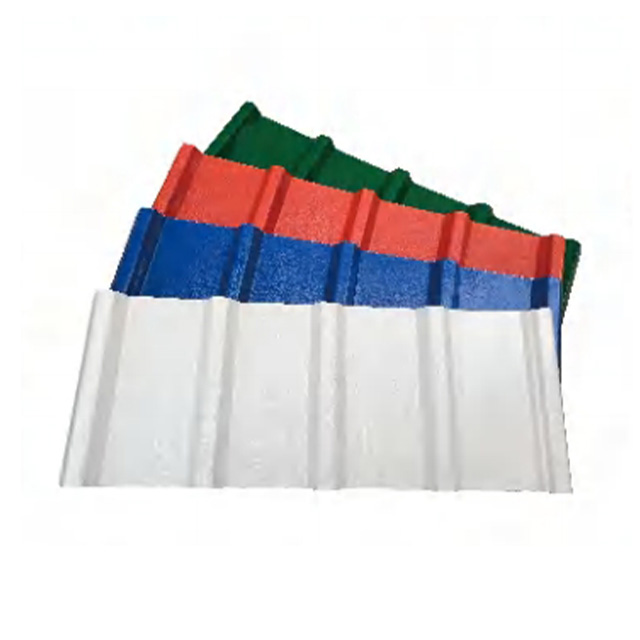
Engineers and specifiers must measure the success criteria of a composite roofing system against alternatives like modified bitumen or metal. You cannot rely on visual inspections alone. Rigorous evaluation dimensions dictate whether a material will survive in a specific industrial environment. Field performance relies on verifiable laboratory data.
Metal roofs fail in coastal, agricultural, and heavy industrial applications. Rust and oxidation destroy traditional materials rapidly. Corrosion resistant composite roof tiles provide immunity to these threats. Specifiers evaluate resistance to specific agents like hydrochloric acid, sodium hydroxide, and salt spray. ASA and PVC are inherently inert to most industrial chemicals. They do not oxidize. This makes them the definitive choice for fertilizer storage facilities, galvanizing plants, and coastal warehouses exposed to constant salt fog. Immersion tests confirm that these panels maintain their tensile strength even after prolonged exposure to 20% sodium hydroxide solutions.
Industrial roofing must meet strict fire safety codes. PVC possesses natural self-extinguishing properties due to its high chlorine content. It requires a continuous external flame source to burn. Once you remove the flame, the material stops burning. Specifiers must verify necessary fire ratings before procurement. Look for compliance with standards such as UL 790, Class A. The four-layer structure maintains these fire-retardant properties without compromising chemical resistance or structural strength. During a burning brand test, the material should char rather than ignite and spread flames across the roof deck.
Roofing panels must endure dynamic physical stress. Testing metrics focus on dynamic puncture resistance, breaking strength, and static load bearing. The rigid PVC core prevents hail damage by absorbing kinetic energy. High tear resistance ensures the panels stay attached to the purlins under severe wind uplift. Furthermore, the composite structure safely supports maintenance foot traffic. Workers can walk on the designated load-bearing sections without cracking the panels. Drop dart impact tests verify that the material can withstand sudden, concentrated force without fracturing.
Procuring high-quality composite roofing requires strict supplier vetting. Poor manufacturing tolerances lead to catastrophic roof failures. You must audit potential suppliers carefully for commercial-scale projects. A glossy brochure does not guarantee a reliable product.
A reliable ASA roofing sheet manufacturer must demonstrate consistent production quality across large batches. Inconsistent extrusion temperatures cause layer delamination. When layers separate, the roof loses its structural integrity. Audit the manufacturer's facility for automated temperature controls and real-time thickness monitoring. Look at the cooling calibration tanks. If the cooling process is uneven, the sheets will develop internal stress and warp once installed on the roof. Scalability ensures that panel number one thousand matches the exact specifications of panel number one.
Never accept marketing claims at face value. Request specific laboratory tests from the manufacturer. ASA roof tile quality testing should include QUV accelerated weathering tests. This exposes samples to alternating cycles of UV light and moisture to simulate decades of outdoor exposure. Demand ASTM D638 testing for tensile strength. Review reports on dynamic puncture resistance and impact resistance. These documents prove the material performs as engineered under controlled, repeatable conditions.
Identify signs of inferior manufacturing before installation. You can spot several warning signs during a physical sample inspection.
Inconsistent layer thickness indicates poor extrusion control. If the ASA layer is too thin, UV degradation will occur prematurely.
Poor layer adhesion creates severe delamination risks under thermal stress. You should not be able to peel the layers apart with a knife.
Excessive use of recycled PVC fillers in the structural layers compromises the panel. While some clean regrind is acceptable, too much calcium carbonate filler destroys breaking strength and overall panel integrity.
Read the fine print on warranty documents. Differentiate between pro-rated and non-prorated warranties. A non-prorated warranty offers full replacement value for the stated term. Verify the manufacturing facility holds ISO 9001 certification for quality management systems. Look for CE certifications to ensure compliance with international safety and performance standards. Proper documentation separates legitimate manufacturers from low-quality imitators.
Even the most advanced four-layer composite roof will fail if installed incorrectly. Proper implementation requires specific techniques to accommodate the material's physical properties. Installation teams must follow strict engineering guidelines to maintain long-term performance. You cannot treat composite panels like standard corrugated steel.
Installation complexities begin with fastener selection. You cannot use standard nails or basic screws. The system requires specific weather-sealed, corrosion-resistant screws. Installers must use 304 or 316 stainless steel fasteners equipped with EPDM rubber gaskets. Neoprene gaskets degrade under UV exposure, but EPDM remains flexible. These gaskets compress to form a watertight seal over the penetration point. Drive the fasteners at a perfect 90-degree angle to the purlin. Over-tightening crushes the panel profile, while under-tightening leaves the roof vulnerable to wind uplift and water ingress.
Proper purlin spacing prevents panel sagging over time. The structural PVC core carries the load, but it requires adequate underlying support. Follow the manufacturer's exact specifications for purlin distance based on the specific panel profile and local environmental loads. Standard profiles typically require purlin spacing between 800mm and 1000mm. Heavy snow regions require tighter purlin spacing, often reduced to 600mm. Exceeding the recommended span leads to micro-cracking and compromises the tear resistance of the entire roofing system.
Handling thermal expansion joints during installation is non-negotiable. ASA PVC roofing sheets expand and contract with temperature shifts. Installers must pre-drill oversized holes for every fastener. The hole should be 2 to 3 millimeters larger than the screw shaft. This allows the panel to move slightly beneath the rubber gasket without tearing the plastic. Failing to accommodate this movement guarantees fastener tear-out and subsequent roof leaks. Additionally, installers must ensure proper overlap. High-wind areas require a two-wave overlap, while standard environments only require a one-wave overlap.
Four-layer ASA PVC composite roof tiles provide a highly engineered solution for demanding environments. They offer unparalleled chemical resistance, extreme UV exposure mitigation, and long-term structural stability. You eliminate the risk of rust entirely. Procurement teams should shortlist these systems when traditional metal roofing fails due to corrosion. They serve as the optimal replacement when modified bitumen requires too much upkeep or when standard PVC becomes brittle and fades.
Audit your facility's specific environmental stressors, including local UV index data and internal chemical exposure levels.
Request specific layer-thickness tolerances and certified laboratory testing reports from your shortlisted manufacturer.
Procure physical samples of the four-layer composite panels for internal evaluation and destructive testing.
Review the manufacturer's exact installation guidelines regarding purlin spacing and thermal expansion management.
A: Standard PVC lacks UV stability, leading to rapid color fading, chalking, and severe embrittlement within a few years. ASA PVC roofing sheets feature a co-extruded top layer of Acrylonitrile Styrene Acrylate. This ASA layer blocks 99% of UV radiation, holds its color for decades, and prevents the underlying PVC core from becoming brittle.
A: When installed correctly, four-layer ASA PVC roof tiles have an expected lifespan of 25 to 30 years or more. This longevity is supported by QUV accelerated weathering test data. The exact lifespan depends on proper purlin spacing, correct fastener application, and local environmental extremes.
A: Yes. The materials are inherently chemically inert. Unlike metal, ASA and PVC cannot rust or oxidize. This makes them ideal for chemical manufacturing plants, coastal facilities exposed to salt spray, and livestock farms dealing with high levels of ammonia off-gassing.
A: You should request reports for QUV accelerated weathering to prove UV resistance. Ask for ASTM D638 testing to verify tensile strength. Additionally, demand data on dynamic puncture resistance, breaking strength, and official fire retardancy certifications like UL 790 Class A.
A: No. Despite the multi-layer architecture, the composite material remains exceptionally lightweight compared to traditional clay, concrete, or heavy metal tiles. However, you must strictly adhere to the manufacturer's specified purlin spacing to support the panel's specific load profile and prevent sagging.
A: Like all plastics, ASA PVC tiles expand and contract with temperature changes. Installers mitigate this by pre-drilling oversized fastener holes. This allows the panels to shift slightly without tearing. Using specialized weather-sealed caps and EPDM gaskets protects the breaking strength at the fastening points.


