
close
Choose Your Site
Global
Social Media
Author: Site Editor Publish Time: 2026-07-04 Origin: Site


Roofing procurement errors often lead to severe compounding costs for commercial builders. Facility managers face massive unexpected expenses when HVAC inefficiencies, premature corrosion replacements, and excessive structural framing demands accumulate over time. Choosing incorrect materials causes immediate setbacks during construction and decades of elevated maintenance bills. Facility leaders simply cannot afford these recurring budget drains. You must get the initial material selection right.
For industrial, agricultural, and coastal facilities, choosing between traditional corrugated profiles and twin-wall structures dictates your long-term financial and operational viability. Both options present distinct advantages depending on your specific environmental demands and strict engineering constraints. This guide objectively compares these profiles across crucial structural performance metrics. We will thoroughly examine thermal performance, load-bearing realities, and installation economics in detail. Readers will gain actionable insights to support evidence-based procurement decisions and optimize their commercial structural investments.
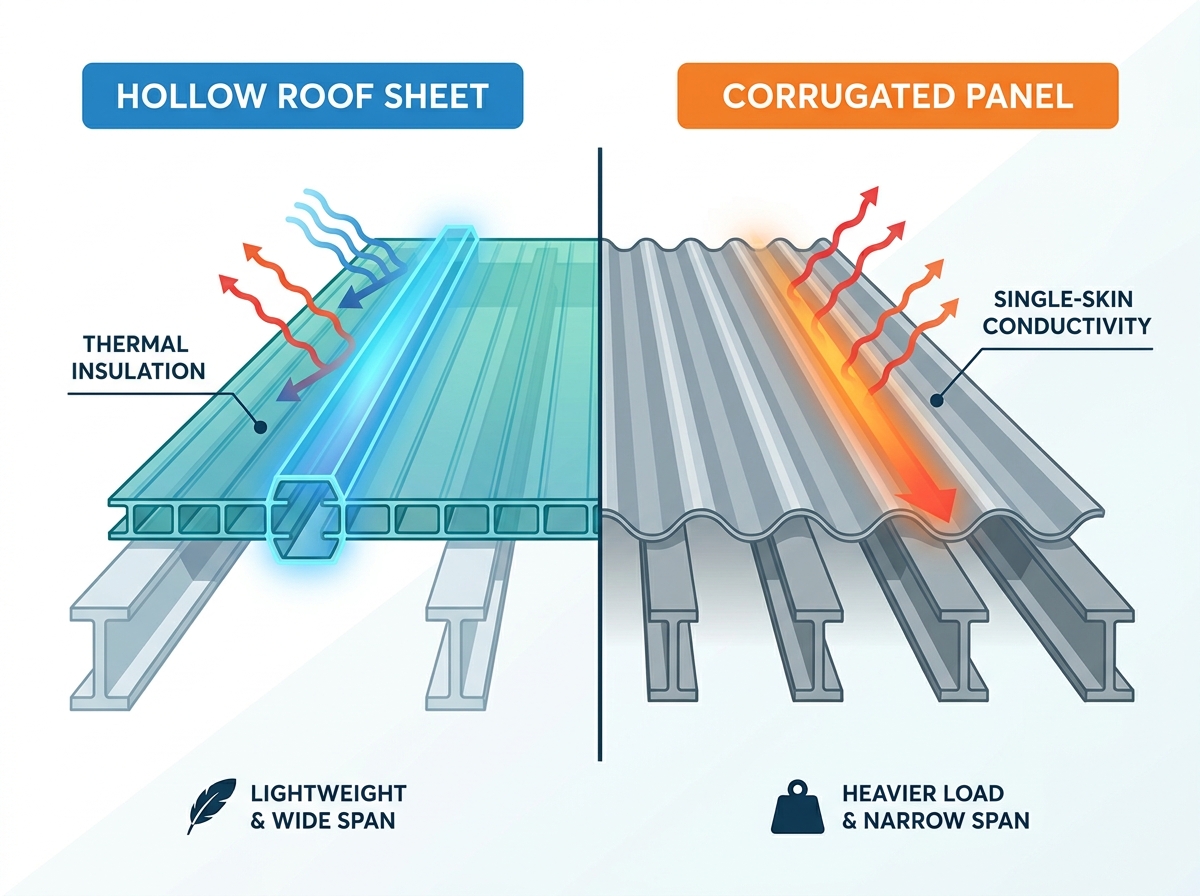
Thermal Efficiency: Hollow sheets drastically reduce thermal bridging compared to single-skin corrugated panels.
Structural Load: Corrugated metal offers superior localized impact resistance, while hollow plastics provide a better strength-to-weight ratio for wide-span structures.
Corrosion Resistance: Polymer-based hollow sheets outperform standard metallic corrugated panels in chemical, coastal, and high-ammonia agricultural environments.
Sourcing Risk: Partnering with a vetted manufacturer ensures consistent extrusion quality, mitigating the risk of premature UV degradation or panel delamination.
The twin-wall or multi-wall extrusion process defines modern hollow architecture. Manufacturers force molten polymer through specialized steel dies to create continuous parallel channels. This intricate geometry forms a built-in internal air gap. The trapped air acts as a natural buffer against external environmental extremes. It physically separates the hot exterior layer from the climate-controlled interior layer. Some advanced architectural profiles even feature diagonal internal ribs for enhanced load distribution and shear strength.
Conversely, traditional corrugated geometry relies on an undulating, single-skin design. You will typically see this wave pattern engineered into sheet metal, basic PVC, and standard polycarbonate panels. The continuous peaks and valleys deliver excellent longitudinal rigidity. This proven shape prevents the thin material from folding under its own weight across short structural spans. It allows builders to span purlins without adding heavy, expensive sub-decking materials.
Interestingly, these distinct mechanical principles sometimes overlap in modern manufacturing. A hollow pvc roof panel can feature a corrugated exterior profile while perfectly maintaining the twin-wall internal structure. This hybrid approach beautifully combines the bending strength of a wave pattern with the thermal benefits of insulating air gaps. Traditional corrugated products, however, exclusively refer to solid, single-layer sheets entirely lacking any internal voids.
Facility engineers must evaluate building materials well beyond basic weatherproofing capabilities. Daily performance metrics dictate ongoing energy expenditures, preventative maintenance schedules, and overall structural integrity over decades.
We first look at thermal and acoustic insulation capabilities. The internal air pocket inside an insulated hollow roof sheet acts as a formidable thermal barrier. It effectively slows heat transfer, maintaining highly stable interior temperatures. Furthermore, the multi-layered design drastically dampens the drumming noise of heavy rain or hail storms. Single-skin corrugated metal exhibits extremely high thermal conductivity. It transfers exterior solar heat directly inside unless you install a thick secondary insulating underlayment. In real-world applications, utilizing a thermal insulation roof sheet in temperature-controlled warehouses drastically reduces daily HVAC energy consumption. You avoid the hidden operational costs of running industrial chillers at maximum capacity during harsh summer months.
Next, carefully consider the dead load placed on primary building trusses. Heavy roofing materials demand closer purlin spacing and highly robust steel framing to prevent sagging. We position hollow polymer profiles as a high-performance lightweight roof panel solution. Their exceptional strength-to-weight ratio allows structural engineers to design significantly wider purlin spacing safely. This calculated reduction in required support structures directly lowers overall steel framing costs and speeds up initial building erection.
Chemical and environmental durability also separates these two structural profiles dramatically. Coastal facilities face continuous aggressive salt spray, while agricultural fertilizer plants manage highly concentrated ammonia fumes daily. Polymer hollow panels resist oxidation naturally. They simply do not rust, corrode, or degrade under harsh chemical exposure. Standard corrugated metal relies heavily on applied galvanic coatings, such as zinc or aluminum-zinc alloys. These metallic surface treatments inevitably degrade over time due to micro-abrasions. Once the protective coating scratches or wears thin, rapid structural oxidation begins, eventually compromising the entire commercial roof system.
Material Performance Comparison Matrix
| Performance Metric | Hollow Polymer Profiles | Single-Skin Corrugated Metal |
|---|---|---|
| Thermal Insulation (U-Value) | High (Internal air gap acts as barrier) | Low (Requires secondary insulation) |
| Acoustic Dampening | Excellent (Reduces rain and hail noise) | Poor (Prone to internal echo and drumming) |
| Framing Requirements | Minimal (Permits wide purlin spacing) | High (Demands denser structural support) |
| Corrosion Resistance | Superior (Inherent chemical resistance) | Moderate (Highly dependent on surface coatings) |
Theoretical performance metrics only tell half the story for procurement teams. On-site installation mechanics frequently reveal hidden expenses and unforeseen labor challenges. Fastening systems often expose distinct mechanical vulnerabilities for each specific material type.
Installers must handle hollow panels carefully to avoid overtightening structural fasteners. Excessive drill torque can easily crush the sensitive twin-wall profile. This execution error creates localized weak points and encourages potential water pooling. Conversely, long-run corrugated metal experiences significant thermal expansion and contraction cycles daily. This constant movement places massive shear stress on metal fasteners. Over time, these elongated screw holes become primary leak points during heavy wind-driven rain storms.
Handling and on-site logistics present another sharp contrast for contractors. Thin corrugated metal requires delicate handling during transit and lifting operations. Forklifts or careless staging can easily crease the large metal sheets. A creased metal panel loses its structural integrity immediately and requires replacement. Hollow sheets generally resist creasing but demand strict edge-sealing procedures before final installation. Crews must diligently apply specialized breathable tapes to the open flutes. This crucial preparatory step prevents internal moisture and construction dust buildup within the channels.
Labor hours heavily influence the final installation budget. Consider these documented project timeline realities when planning your build:
Wide-span hollow sheets cover extensive square footage rapidly due to their rigid yet highly manageable nature.
Roofing crews expend far less physical energy maneuvering lightweight polymer panels into precise structural alignments.
Overlapping narrow corrugated panels demands tedious, constant alignment checks across every single weather seam.
Installing required secondary insulation under single-skin metal panels effectively doubles the total time spent working on the roof deck.
Faster, streamlined installation translates directly to significantly reduced contractor labor fees and earlier facility commissioning dates.
Different industrial sectors face entirely different environmental stresses and operational hazards. Procurement teams should tightly tailor their material shortlists to their facility's specific geographic risk profile.
We heavily recommend twin-wall sheets for large agricultural and livestock facilities. Animal enclosures generate massive amounts of ammonia gas and ambient indoor humidity. Polymer panels offer superior chemical resistance and excellent condensation control year-round. The multi-wall structure prevents cold exterior temperatures from chilling the interior ceiling surface. This vital thermal break stops corrosive condensation droplets from forming and falling back onto livestock, raw feed, or expensive automated milking equipment.
Coastal and marine warehouses require highly specialized structural protection. Continuous coastal salt fog aggressively attacks standard steel building materials. We strongly recommend specifying heavy-duty PVC or advanced resin panels over standard galvanized metal corrugated options. This deliberate procurement choice completely eliminates the risk of salt-spray rusting, which routinely plagues harbor-adjacent logistics hubs and naval storage yards.
Heavy industrial and high-impact manufacturing zones demand a completely different engineering approach. You should lean toward thick-gauge corrugated metal for these unforgiving environments. Steel mills, scrap recycling centers, and heavy manufacturing floors often experience falling debris or swinging crane loads. Metal profiles handle extreme point-loads and blunt mechanical impacts significantly better than rigid polymer plastics. If your primary operational hazard involves heavy objects physically striking the roof deck, metallic impact resistance must take absolute precedence over thermal efficiency.
Sourcing direct raw materials dictates long-term material longevity and overarching project success. Minor variations in resin purity, co-extrusion technology, and UV-coating thickness dramatically alter the lifespan of hollow architectural profiles. You must rigorously vet potential manufacturing partners before signing massive purchase orders.
A reputable hollow roof sheet manufacturer utilizes advanced continuous co-extrusion technology. This high-end production method seamlessly bonds the critical UV protective layer directly to the base polymer substrate. Cheaper secondary coating methods often lead to premature layer flaking, yellowing, and rapid solar degradation.
Use this comprehensive evaluation checklist for your upcoming vendor procurement process:
Production Capacity & Extrusion Tech: Verify the factory currently operates modern continuous co-extrusion lines. This hardware ensures stable, seamless UV protection across massive global production runs.
Tolerance Standards: Demand documented wall-thickness consistency data before purchasing. Uneven internal walls frequently lead to catastrophic structural failure under moderate snow or unexpected high-wind loads.
Compliance & Warranties: Look for verifiable, independent fire ratings from recognized bodies governing commercial building codes (e.g., ASTM E84 or EN 13501 standards).
Warranty Transparency: Insist on clear, legally binding warranty terms. The document must detail acceptable light transmission degradation rates and clearly outline specific hail impact coverage limits.
Our final verdict balances raw mechanical strength against long-term operational efficiency. Choose traditional single-skin corrugated metal when your facility explicitly requires superior localized impact strength and legacy structural integration. Alternatively, choose engineered hollow profiles for superior thermal efficiency, unmatched natural corrosion resistance, and massive structural weight reduction on the building trusses.
Take immediate action to secure your upcoming construction project's ultimate success. We strongly encourage procurement buyers to request physical material samples from their shortlisted suppliers immediately. Review localized case studies demonstrating successful long-term performance in your specific geographic climate zone. Finally, demand exact purlin-spacing charts based on regional wind loads before finalizing your facility Bills of Quantities. Exercising proper engineering diligence upfront completely eliminates the need for expensive structural corrections later.
A: Yes, but it requires careful structural engineering. You must use specialized non-penetrating clamps or long bridging rails. These customized mounting systems transfer the heavy solar array load directly to the underlying structural purlins. This method strictly avoids crushing the hollow polymer structure under localized weight.
A: A hollow roofing tile mimics the stepped aesthetic of traditional clay or ceramic tiles while still utilizing the twin-wall insulation principle. Architects specify tiles for residential or commercial projects prioritizing aesthetics. Standard hollow sheets provide flat, continuous spans designed purely for large-scale industrial efficiency.
A: Proper installation mitigates this internal moisture issue entirely. Construction crews must apply specialized breathable edge-sealing tapes to the panel ends. This microporous membrane allows internal moisture to vaporize and safely escape the flutes. Simultaneously, the sealing tape blocks dust, debris, and nesting insects from entering the hollow core.


