
close
Choose Your Site
Global
Social Media

Choosing a synthetic resin roof sheet for commercial buildings is a big decision. For warehouses and factories, it must resist UV, corrosion, and long service stress. In this guide, you will learn the top 7 factors to compare materials and reduce risk. LESSO's roofing solutions add reliable durability, so learn more about our products.
Note: Commercial roofing is a lifecycle decision, not a short-term purchase.
Commercial projects are shifting toward industrial roof materials that reduce maintenance and improve durability. Traditional metal roofs often suffer from corrosion in coastal zones, while cement tiles add heavy structural load and can crack over time. A synthetic resin roof sheet offers a lightweight alternative with strong resistance to moisture and chemical attack.
Many ASA-PVC systems show far better UV stability than standard plastics. Premium suppliers such as LESSO highlight ASA co-extrusion surfaces that resist harsh sunlight while keeping color stable for years. This matters because commercial roofs must maintain integrity without constant repairs. Buyers also value the faster installation and lower labor cost that resin roof panels enable.
Tip: For warehouses, lightweight roofing can reduce structural reinforcement needs and speed up project timelines.
The demand for synthetic resin roof sheets for commercial roofing is strongest in industries where downtime is expensive. Warehouses, factories, agricultural processing plants, and public infrastructure projects need roofs that resist corrosion, noise, and extreme weather.
For example, industrial facilities exposed to chemical fumes or salt air often choose anti-corrosion synthetic resin roof sheet solutions because they outperform galvanized steel in long-term testing. Many systems, including LESSO industrial-grade roof sheets, are designed specifically for harsh environments where metal roofs fail early.
Large commercial roofs require materials that perform over decades, not just a few years. Resin roof panels deliver value through reduced maintenance, strong UV protection, and long lifespan.
Because they are non-porous, they resist algae buildup and moisture absorption, avoiding freeze-thaw damage common in porous materials. Over time, this reduces repair frequency and improves total cost of ownership.
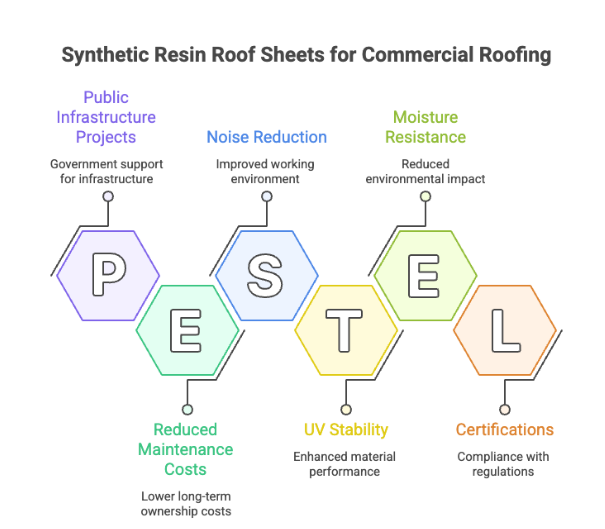
Durability is the first factor buyers must evaluate. A roof sheet in a commercial building faces wind uplift, hail impact, heavy rainfall, and constant thermal cycling. Synthetic resin roof sheet durability for industrial projects is often enhanced through multi-layer engineering.
ASA-PVC blends can achieve tensile strength around 45–50 MPa and withstand impact several times better than standard ABS plastics (data needs verification). These properties make them suitable for warehouses and factories where roof failure can disrupt operations. Many LESSO's roofing systems emphasize uniform thickness and strong impact resistance for demanding industrial use.
Warehouses often have large spans and must handle equipment loads, maintenance access, and storm pressure. Synthetic resin roof sheets with reinforced core layers distribute loads better than thin plastic panels. Some systems report load capacity up to 850 kg/m², compared with much lower capacity in older polymer sheets (data needs verification).
This is critical for commercial roofing because roof collapse risk must be minimized. Buyers should match sheet thickness and profile to building design.
Hailstorms and debris impact are major risks in industrial zones. High-quality synthetic resin roof sheets are engineered to absorb impact without cracking. LESSO also provides tested roofing solutions designed to remain stable under extreme temperature swings, improving reliability for long-term commercial projects.
Commercial buyers should confirm impact testing results, especially in regions prone to extreme storms.
Corrosion is one of the biggest reasons commercial roofs fail early. Metal sheets rust, especially in salt spray zones or chemical plants. An anti-corrosion synthetic resin roof sheet for industrial use avoids this issue entirely because it does not oxidize like steel.
LESSO roofing materials are often promoted for strong chemical stability, even in acid-alkali environments, making them suitable for industrial facilities where corrosion risk is high.
In chemical processing facilities, airborne acids and industrial pollutants accelerate roof damage. Synthetic resin roof sheets provide chemical stability and moisture resistance, reducing leak risk.
Coastal warehouses also benefit because salt air destroys metal quickly. Choosing resin roofing can extend service life and reduce expensive replacements.
Material Type | Corrosion Risk | Best Application |
Galvanized Steel | High in salt air | Dry inland warehouses |
Cement Tiles | No rust but porous | Low-chemical environments |
Synthetic Resin Roof Sheet | Excellent resistance | Coastal + industrial projects |
Note: Always evaluate environment exposure before selecting roofing.
Factories often operate in high-UV regions where roofs face constant sunlight. A UV resistant synthetic resin roof sheet for factories prevents fading, brittleness, and surface breakdown.
Color fading is not just cosmetic. It signals polymer degradation that can lead to cracking. High-quality synthetic resin roof sheets use UV stabilizers and ASA surface layers to slow aging.
For commercial buildings, maintaining roof integrity reduces maintenance costs and protects indoor environments.
ASA-layer roofing sheets combine structural PVC cores with UV-resistant top layers. This multi-layer design prevents delamination under thermal cycling from -30°C to 120°C (data needs verification).
For warehouses and factories, ASA protection ensures long-term performance with minimal surface wear.
Tip: In tropical markets, ASA-layer roofing is often the safest durability choice.
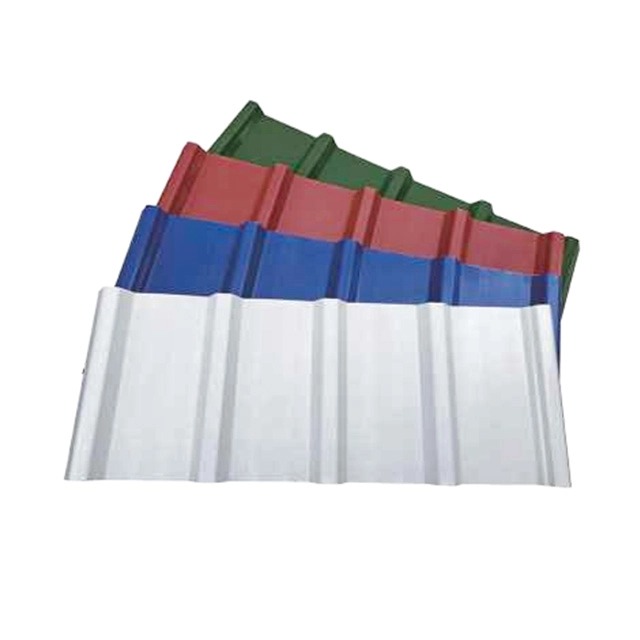
Thermal control matters in commercial projects because cooling costs can be high. Synthetic resin roof sheets often have thermal conductivity around 0.21 W/mK, cutting cooling demand by 18–23% in hot climates (data needs verification).
Some LESSO's roofing solutions also emphasize insulation comfort, helping industrial facilities reduce indoor heat buildup.
Rain noise is a common complaint with metal roofs. Synthetic resin roof panels dampen vibrations, reducing outside noise by around 12 decibels (data needs verification).
This is valuable for schools, retail centers, and industrial facilities near residential areas.
Thermal insulation and noise reduction combine to create better indoor environments. Workers experience less heat stress, and machinery noise does not amplify through roofing structures.
Commercial buyers should consider these benefits beyond basic waterproofing.
Cost is always part of procurement. The cost of synthetic resin roof sheets for commercial roofing depends on thickness, ASA layers, certifications, and customization.
LESSO's products are often positioned as long-life roofing solutions that reduce total replacement frequency, helping buyers balance upfront cost with lifecycle value.
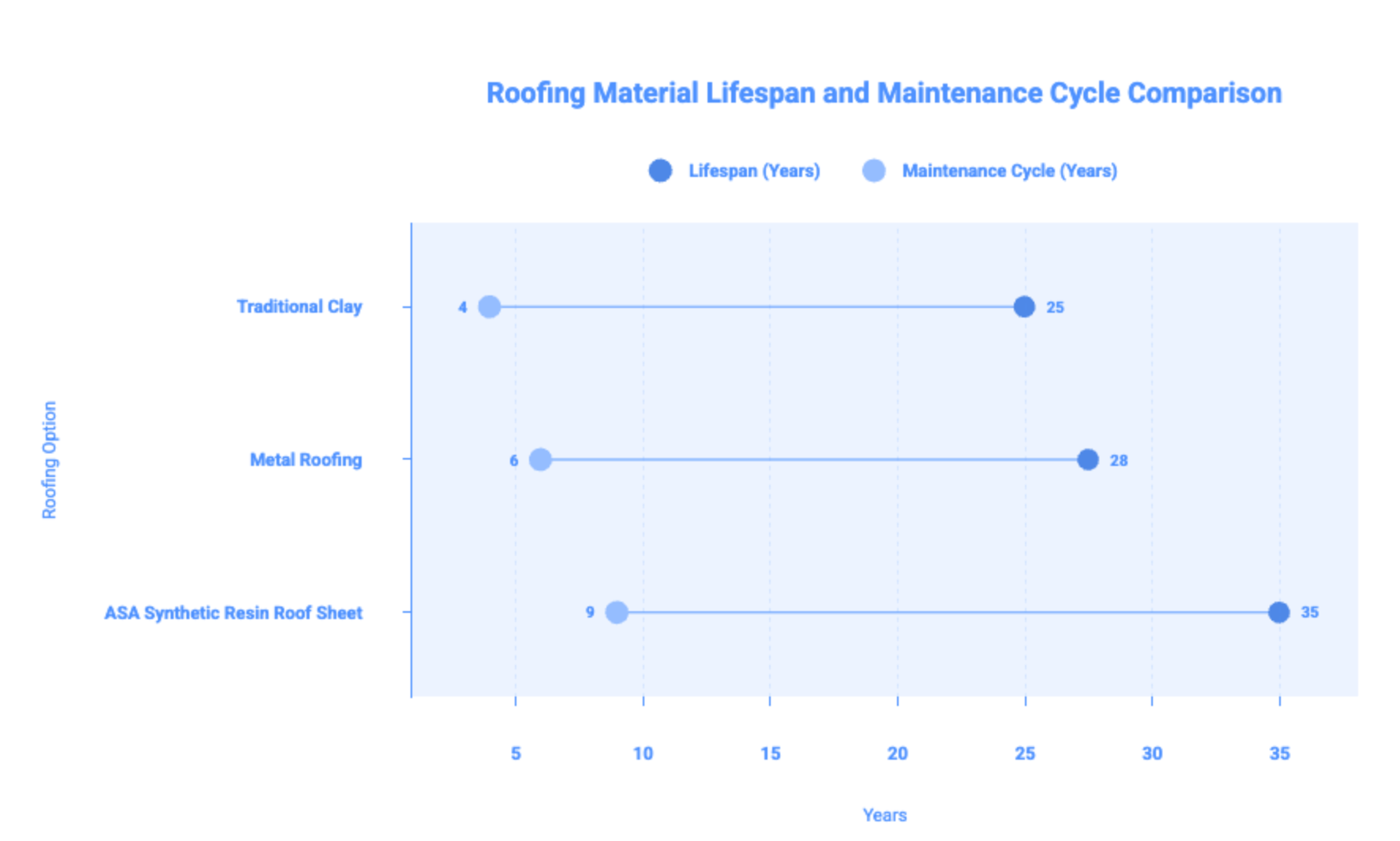
Commercial buyers must balance budgets with durability. A roof that lasts longer reduces replacement downtime and protects business operations. Resin roof panels can lower long-term expenses by up to 40% compared with traditional materials (data needs verification).
Installation speed matters in commercial builds. Buyers should look for standardized panel widths, interlocking laps, and compatible accessories.
Lightweight resin roofing reduces building load by 30–50%, lowering structural support requirements (data needs verification).
Mistakes like incorrect overlaps, improper fasteners, or ignoring thermal expansion gaps lead to leaks and warping.
Note: Poor installation can cancel out even the best material advantages.
Supplier reliability is crucial. Buyers should check certifications such as ISO, CE, and SGS.
Tested products provide confidence in durability, UV stability, and corrosion resistance.
Working with established suppliers ensures consistent batches, technical support, and warranty coverage. LESSO provides synthetic resin roof sheet solutions featuring UV resistance, corrosion protection, and long service life for demanding commercial environments.
Large warehouses require strong corrugated profiles, while retail centers may prioritize aesthetics.
Thicker sheets provide better load resistance, while multi-layer ASA systems improve UV protection. Profile selection affects drainage speed and wind uplift resistance.
The best synthetic resin roof sheets for warehouses combine durability, corrosion resistance, insulation, and supplier support.
Key Feature | Why It Matters | Commercial Benefit |
ASA UV Layer | Prevents aging | Long-term durability |
Anti-corrosion design | Works in harsh air | Ideal for factories |
Self-cleaning surface | Reduces moss buildup | Lower maintenance cost |
Buying synthetic resin roof sheets requires checking durability, corrosion resistance, UV stability, insulation, cost, and installation needs. These seven factors help reduce long-term risk and ensure reliable service for decades. A high-quality synthetic resin roof sheet is a smart investment in building protection and stability. Choosing LESSO's products adds trusted performance, long lifespan, and strong value for commercial projects.
A: It is a durable roofing material designed for warehouses, factories, and industrial projects.
A: Compare durability, UV resistance, and anti-corrosion synthetic resin roof sheet performance.
A: They prevent fading, aging, and long-term surface damage under strong sunlight.
A: Pricing depends on thickness, ASA layers, and supplier quality, but lifecycle value is higher.


